
About

Meet Mary
Curator of Books, Literary Event Specialist, Marketing and Management Expert, Avid book reader and reviewer, Law Graduate, Legal Publications Officer.
Mary spent the first four decades of her working life in the book trade in Melbourne, Australia.
Dedicated and passionate about books and literacy, she ran, in succession, the three largest bookselling outlets in Melbourne, a UNESCO City of Literature.
During that time, she initiated annual literary festivals, hosted hundreds of events, welcomed local and international authors launching their new books, and nurtured twenty-two booksellers who had an average tenure of twenty-five years.
The cultural heartbeat of our great city was aided by her endeavours. She was instrumental in bringing a major exhibition to the State Library of Victoria, donated to the restoration of the famous Reading Room in that library, and gifted a James Joyce Seat of Learning to the library forecourt.
Mary commissioned the installation of Hands in Print at The Melbourne Athenaeum Library, the rendering in sculpture of the writing hands of twelve prominent authors including international and local award winners.
With a personal library of thousands of books with emphasis on the crime fiction genre, and the history and culture of Ireland, she addresses audiences on books, genres, trends and undertakes book reviews for radio and social media.
She immersed herself in the world of bookselling, doing two terms as president of the Australian Booksellers Association; was shortlisted for the Telstra Business Woman of the Year award in 1996 and for the Melbourne Business Awards in 2010; and her bookstore, Reader’s Feast, was runner-up in the Victorian Small Business Retailer of the Year award in 2013.
Over the decades she developed several strands of expertise - marketing, business development, event management, public relations and leadership skills, all of which are transferable to other fields of endeavour. Mary currently works with libraries and undertakes freelance projects in proofreading and events consultancy and management. She is also a book reviewer on radio. Go to the "Engagement" tab to learn more.
And, then the next chapter…
Mary began a second, parallel career in law. Working as a Senior Associate to a Judge in the Federal Court of Australia, Mary completed her degree in November 2024. She is currently the Senior Judgments Officer in the Federal Court of Australia.
Mary maintains her connections with the book trade through her reviews and social media whilst she conducts training on the formatting and style of judgments emanating from the Federal Court of Australia and the Federal and Family Court of Australia. As well, she prepares judgments and ensures they are published correctly.
Follow me on social media: @booksbydalmau

areas of Expertise
Proofreading
Book reviews
Speaking engagements
Interviews
Business development
Leading, Developing and Motivating Work Teams
Strategic Library Collection Management
Project management
Marketing & Promotion
Management of people and resources
Event Management
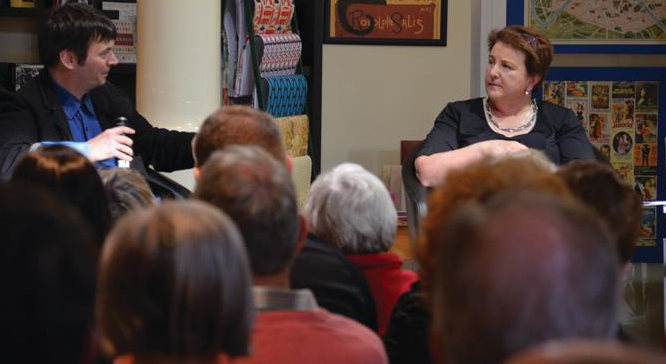
From small groups to audiences of thousands, I can organise your event.
Specialities: author interviews, “In Conversation”, Launches, Exhibitions, Commissions, Public events.
From the back catalogue of events:
Festivals:
Melbourne Writers’ Festival Bookseller
Writers at Como
Writers at the Convent
Crime & Justice
Author Events and Interviews:
Charles Salzberg
Ian Rankin
Sir Roger Moore
Jo Nesbo
Rod Laver
Camilla Lackberg
Graeme Simsion
Cultural Events:
Catalan St. Jordi Day / World Book Day Celebrations
Translation Awards (AALITRA) Ceremony
Ned at the Dead Exhibition – Dublin, Ireland 2006
Public Events:
Harry Potter releases – State Library of Victoria and Federation Square
Luka Bloom Concert – National Theatre, St. Kilda
Steve Waugh autobiography launch – Queen Victoria precinct
Book Launches:
Maureen McCarthy
Ben Albrecht
Paul Filev
Judith Lucy and Denise Scott
In Conversations:
Phillip Adams
Stuart Macbride
Scott Bevan
Readers’ Theatre:
84 Charing Cross Road
Voices of Democracy
A Christmas Carol
Literary Seasons
Proofreading
Proofreading service available for all types of documents, including manuscripts, essays, articles, design briefs. Rate is $80.00 AUD plus GST per hour or part thereof. Minimum engagement 2 hours. Payment 14 days from invoice.
Mary has worked with Balarinji on numerous occasions delivering editing and proofreading services. Mary is reliable, thorough and competent. She is accommodating and punctual and saves a lot of time in our Studio. Mary is our go-to Editor and I would highly recommend her. Rachel Taylor, Balarinji.

HOw can i help?

Reviews
I review books on national radio 3AW each month. I post book reviews on my website and actively promote books via my social media platforms - booksbydalmau
Proofs accepted for review assessment:
PO Box 5061, Moreland West LPO,
418 Melville Road,
West Brunswick, Vic, 3055.

Proofreading & Copywriting
I provide proofreading services for all types of documents - manuscripts, essays, articles, design briefs. Turnaround time is typically 24 hours depending on the size of the project. Deadlines always met. I am also able to provide copy for newsletters and booklets, with more than fifteen years experience in producing a quarterly, 24 page book guide.


Events Management & Interviewing
I can be contracted to undertake event management.
Specialities: author interviews, “In Conversation”, launches, exhibitions, commissions, public events. I have a background in venue hire, event costing, marketing and promotion via social and print media. I am a proficient and engaging public speaker and a seasoned interviewer.

Latest Reviews
Read current reviews here. For more reviews, click on the Archived Reviews tab.
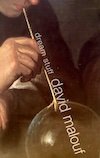
This is not a review as such but, rather, a reflection on the love affair with AI and why I do not want to embrace it. There is, however, a reference to Australian author, David Malouf. I recommend his body of work to all.
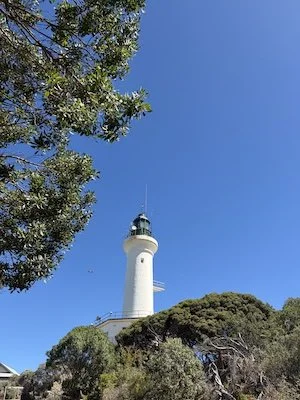
Pt. Lonsdale lighthouse, Victoria, Australia. Photograph: M Dalmau, all rights reserved.
If ever we needed to follow the RIGHT light…..
As reported in February 2026, Antoni Gaudi’s cathedral, Sagrada Familia, now has its final central tower piece, the cross, in place, 144 years after the Catalan architect began work on it. With an estimated ten years to continue to total completion, it remains a work in progress with many minds and hands from people from as far away as New Zealand involved.
The constant observation of the landscape of his childhood and his architecture studies at the university of Barcelona led him [Antoni Gaudi] to a particular conception of the world: that setting, with its animals and plants, brought together all of the constructive and structural laws that architects needed to plan their buildings.
Thus, the inspiration Gaudi required to make up for the few deficiencies of his genius he found in the natural world.[1]
Clearly, my point on referencing Gaudi is that human endeavour and creativity, and the fruits of the labour (physical and mental) of men, women and children is the sum total of influences from our natural world, not from cyberspace. It has created the world in which we live, good and bad, and which we have had control over, again, good and bad (just think of the current horrors around the world where ‘living history’ such as places of worship are being destroyed for one ideology or another).
The love affair with AI bears no appreciation for the interconnection between a person and what and who influences him/her such that something unique emerges. It is, it seems to me, designed to do exactly the opposite – to stifle human creativity. And, this is not for some ‘higher purpose of evolution of our species’; it is about the age-old imperative – control and money. More power to the tech bros for their economic benefit. It is about disruption – a description weaponised to suggest a good thing (as in disrupting for the sake of the betterment of our society) versus its meaning in this context, disruption to limit society as it becomes dependant on their agendas.
Obviously, advances in science and technology have produced remarkable and indispensable benefit to millions – just one example is the diagnosis and treatment of eye disease. In my grandmother’s era, if you had cataracts, it was an ‘operation’ and a minimum nine days’ rest in a darkened room. Now, depending on the particular issue, it is laser treatment of a few moments and a short recuperation time. And we have all been using a version of AI since being introduced to Mr Google in 1998.
The difference now is what I consider the insidiousness of the current push for AI. The Cambridge Dictionary definition of insidiousness is ‘the quality of gradually and secretly causing harm’. I would suggest that is exactly what the unrelenting promotion of AI is but it is also even more simple than that – it is the manipulation of the human flaw to want the bright, new shiny thing without an assessment of whether there is real need. AI promotors will tell you that: it significantly improves productivity in the workplace, and it is personalised to your needs. How is productivity improved when the ‘new’ job is for workers to check AI results for inaccuracy (we are all reading of the fundamental and critical mistakes in all settings including the law) from AI generated content. Further, do I really need a computer friend to personalise something for me? Can I not decide what connections I make with others? The profiteers of AI cynically use terms such as ‘copilot’ and ‘chat’ to subliminally suggest it is there for you….it is not. It is for them. Side note – for ‘productivity’ read cost reduction. That sounds fine but what exactly are all the humans going to be doing if they are no longer required and how are governments going to garner revenue from people who have no source of income?
What I find astounding is the rush to embrace (completely uncritically) AI by governments, universities, public institutions, and private businesses. How exactly do they see everything they rely on – oversight, governance, confidentiality – surviving if they ultimately have no control? Good luck finding someone to blame when no human can be found who actually had anything to do with the false record, the wrong medication, etc.
We might just have reached a lemming peak! Hurtling to our own destruction. That sounds extreme and slightly mad but think about it….do we really believe the tech bros care about any of the following: the individual; human achievement and satisfaction; the social environment; or the quality of life we enjoy? Or, do we accept that this whole push is designed purely to expand their control so they can make more money.
The word manipulation is critical to this debate as it not only, in my opinion, describes exactly what is going on but also opens up the conversation to discuss who benefits and who loses from this ‘big tech’ push.
The British drama Years and Years laid it out for us when the matriarch played by Anne Reid explains what the automation of supermarket check-outs is symbolic of: the effect of wholesale complicity in the ‘world’ view as presented by the tech bros.
….you didn’t do anything did you? Twenty years ago when they first popped up did you walk out? Did you write letters of complaint? Did you shop elsewhere? No. You huffed and you puffed and you put up with it. And now all those women are gone. And we let it happen.
And I think those checkouts, we want them. Because it means we can scroll through pick up our shopping and we don’t have to look that woman in the eye. The woman who’s paid less than us. She’s gone. Got rid of her. Sacked.
So yes, it’s our fault.
This is the world we built.
This is my fundamental point. We believe this isn’t our choice; it is being presented as the only option and the best thing for us. It has the potential to irrevocably alter what we have known as society and human endeavour, and we are criticised if we dare to question the motivation behind it. The ramifications are enormous, especially on the future for those who are at school now or younger – what will their life look like?
Change and innovation have always been as breathtaking as AI is today. It has meant loss for some and gain for others; it has resulted in closures and new avenues at the same time. The difference with AI, though, is that we (humans) do not factor. We are merely observers in the race to improve the lives of a very, very few who will happily control every aspect of the human experience for the vast majority of the population.
You may be happy with that but if you are not, don’t be complicit. Push back and support human creativity and human intelligence.
The photograph accompanying this article is one I took on summer holidays. The ubiquitous symbol of navigation. And, if ever we humans needed guidance to the RIGHT light, it is now.
Many will tell you the current light of AI is bright, necessary, transformative, and more. They extol the virtues as they see them and pass over any negative connotations.
The light that beams out from a lighthouse illuminates everything within its range and provides a pathway. It seems the light of AI is blinding us rather than guiding us.
A favourite writer, David Malouf, ends one his short stories, Great Day, with this:
Down in the cove, the bonfire, threw up flames that cast a flickering redness over the sand, and one of the men, conscious perhaps of the renewed heat, sat up for a moment out of sleep and regarded it, then burrowed back into the dark. Till here, as on other beaches, in coves all round the continent, round the vast outline of it, the heat struck of a new day coming, the light that fills the world.[2]
I want to read something written entirely by a human being, happily aided by the technology in how he/she presents the work, but written by a person. This paragraph conjures up so much for me as the human reader of it: the Australian landscape I am fortunate to know, the suggestion of the physical world cradling us, and the innate connection between human and environment. And, the light that emerges to bring each new day. That is the light I want, not the light of a computer screen presenting itself as my friend and saviour.
If we are going to be blinded by the light, let’s make it a good one!
[1] teNeuees (2003) Antoni Gaudi, Edited by Ascensio, Paco et al, 2003.
[2] Malouf, David, (2000). Dream Stuff, Great Day. Chatto & Windus.
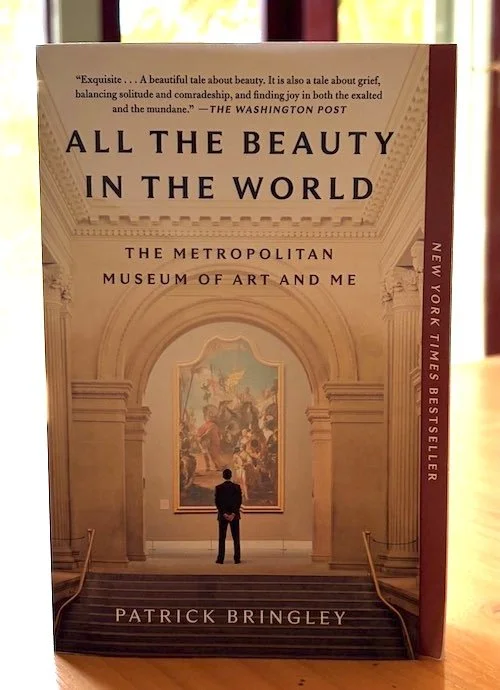
All the Beauty in the World
Patrick Bringley
Simon & Schuster 2023
My last two visits to the wonderful National Gallery of Victoria in Melbourne, Australia, have been marred by the incessant ‘selfie’ activity. Personally, if I had a choice for future reminiscing between a photograph of a Van Gogh or a photograph of Van Gogh with me in the frame, I’d opt for the first one every time. That is, if I would even have a photo from my visit to the gallery. I have always thought the point is to lose oneself in the art. I actually want to be taken out of myself and suspend ‘my’ reality for a moment.
With this in mind, I opened All the Beauty in the World by Patrick Bringley and am delighted to report I was suspended in his time as I read this poignant and interesting chronicle. Mr Bringley’s first visit to the Metropolitan Museum of Art (the Met) was when he was 11 years old and visiting New York from Chicago. After the death of his older brother, Tom, in 2008, he returned to the Met and began what would be ten years of service as one of the more than 500 security guards.
The wonder he experiences as he discovers each gallery is palpable, and the solace he finds in being quiet yet part of the community of guards allows him time to readjust to this world in Tom’s absence.
For others like me who have never studied art history but love galleries and most forms of art, All the Beauty in the World is a riveting and accessible written tour of art through the centuries. And, helpfully, at the end of the book, Mr Bringley provides a guide to the artworks referenced in the text, and a bibliography ordered by the type of art, a museum history, and exhibition related references.
However, it is his use of the Met as the backdrop to navigating the grief of losing his brother that is the heart and soul of this book:
When in June 2008, Tom died, I applied for the most straight-forward job I could think of in the most beautiful place I knew. This time, I arrive at the Met with no thought of moving forward. My heart is full, my heart is breaking, and I badly want to stand still awhile.
It is the stillness and silence that is key to his healing and to his appreciation of art, of spaces that honour art, and of the value of being around other people but not needing to engage with them directly.
The other point of note in this well-written memoir, is that no one should judge what it takes to work in a particular field or judge those who work in any environment. With absolutely no knowledge of a specific job such as security guard at a museum, people (myself included) make all sorts of assumptions. Mr Bringley manages to illuminate not only the various activities a day’s work encompasses but also sheds light on unexpected benefits of the work: ‘The glory of so-called unskilled jobs is that people with a fantastic range of skills and backgrounds work them’. He meets and strikes up friendships with people from a number of countries, all of whom have a story to tell of their former employment, memories of their childhood as far removed from his as can be imagined, and tales of how they each came to stand with him all day in the Met. One reflection on his colleague, Troy: ‘Many mornings, I see Troy at his locker carefully tearing pages from The Times (of London) Literary Supplement, which he slips in his pockets to read at odd moments in lieu of owning a smartphone’. I immediately like Troy! Over time, he comes to the realisation that the people surrounding him in the museum – the visitors – are just as the still figures in the paintings hanging on the wall – of equal interest, worthy of attention. But we, as part of the ‘live’ action don’t realise it. Somehow, the act of portraying humans in paint or any form of art, makes them endlessly interesting to those of us standing on the other side of the easel as it were.
There are three seemingly simple points the author makes that, for me, made All the Beauty in the World such a treat:
- Standing still in grief – allowing the time and space and silence to understand the death of a loved one.
- The richness of the guard corp is one of the riches of the museum – he appreciates and celebrates his work colleagues be they the guards, the curators, the maintenance crews.
- Learn about art and from art – be silent long enough to listen to what art is communicating.
Settling into his new role, Mr Bringley realises he ‘could drop out of the forward-marching world and spend all day tarrying in an entirely beautiful one….’. The Met becomes his workplace, his refuge, his time away from the noise of life. After ten years, he feels ready to make another move:
Sometimes, life can be about simplicity and stillness, in the vein of a watchful guard amid shimmering works of art. But it is also about the head-down work of living and struggling and growing and creating.
Mr Bringley’s website – patrickbringley.com – provides an update on his working life now which still involves, in part, the Met. All the Beauty in the World will be my internal reference when I next venture to the National Gallery of Victoria and I will remember his words:
The first step in any encounter with art is to do nothing, to just watch, giving your eye a chance to absorb all that’s there…..Ideally, for the first minute we shouldn’t think at all. Art needs time to perform its work on us.
Here’s hoping my fellow visitors to the gallery understand the assignment too and put away their phones.
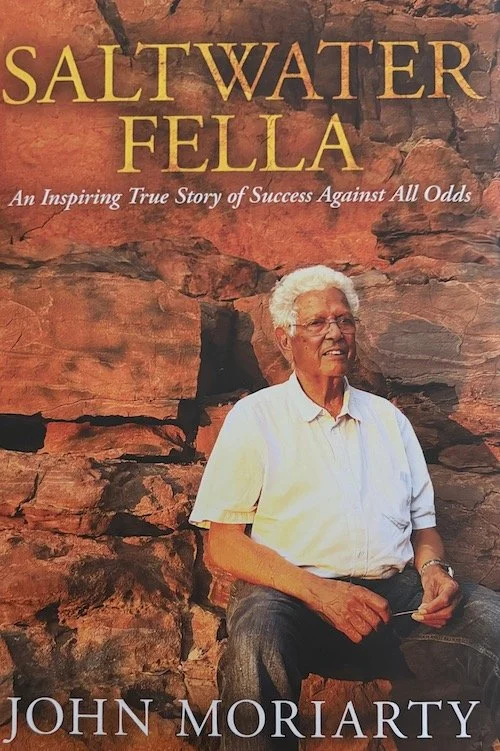
A special edition by The Miegunyah Press 2025
Saltwater Fella
John Moriarty
The Miegunyah Press*
First published in 2000
This new edition published 2025
The sub-title of John’s book is ‘An Inspiring True Story of Success Against all Odds’. That is a perfectly adequate description of John’s life to this point, but it is also, in my opinion, too ‘ordinary’ for what has been, on any measure, a remarkable and extraordinary life.
Take just these three passages:
I was born on the banks of the McArthur River, across from the small outback town of Borroloola on the Northern Territory side of the Gulf of Carpentaria. I believe I was born in 1938 although the exact date of my birth isn’t known. My official birthday, the one given to many Aboriginal people, is 1 April. April Fools’ Day, which is indicative of the attitude of the time.
My early life was spent surrounded by women……I can’t see individual faces; I can’t recall them now. My mum? Not a face. I don’t recall her face before I was taken away. I have no memories of my father at all. Apparently, he was there for quite some time after I was born, but then he moved away….I was about four or five when I was taken. [John is of the Stolen Generations]
The first plane, the Wunala Dreaming plane, was cloaked in secrecy. It was wheeled out just before its first flight, to Kansai Airport, Japan. It landed at dusk on a very still evening. As it came in, you could barely see the plane in the distance but as it came closer and you could see the brightness, the different colours and the bold designs of the plane coming through. It looked fantastic.
[Wunala Dreaming is described on the Qantas site as follows: Wunala Dreaming is the first Indigenous-designed livery inspired by Australia's natural colours, from the bright reds of Central Australia to the purple-blues of desert mountain ranges, and the lush greens of Kakadu.
John and Ros Moriarty, founders of Balarinji, explained the Wunala Dreaming story of John’s Yanyuwa people from the Gulf of Carpentaria"]
In the time between his birth and standing on that tarmac in Japan in 1994, John’s life story is nothing short of remarkable – it is the story of being taken at age four/five to the missions, loneliness, some kindness, hard work, and the refuge that sport offers. But even that refuge was anything but the much touted metaphor of a ‘level playing field’. When the opportunity was being proposed for John to travel to England to play soccer, he found out ‘about needing permission from the Protector of Aborigines to travel’. Reading this sentence, and many others, causes one to pause – the hypocrisy of the name of the office given to the stranger who could determine if and where John could travel; this extended to interstate travel too.
John was selected to play soccer for Australia but for other reasons, the Australian team was disqualified. As John writes:
…I’d been picked to represent my country. I was on top of the world, I really felt I’d earned my place, and I was walking on air. Of course, not getting to play was upsetting, and I was also still seething about needing permission to play soccer interstate. In fact, that was one of the things that brought me to the Aboriginal rights issues. Sport has remained an important part of John’s life and work [https://moriartyfoundation.org.au/programs/john-moriarty-football/ ]
John’s recollections of his university days are indicative of the man I know:
I finally enrolled at Flinders University, in 1966, one of the nicest things that happened was that the registrar, Frank Mitchell, said to me, ‘We haven’t got any Aborigines here. I’d like to welcome you.’ I was very thrilled to be welcomed there. Frank Mitchell was a lovely man, and I felt good about Flinders from then on.
Actually, to the best of my knowledge, I was the first Aborigine in South Australian history to go to university. At twenty-eight, I was older than the general run of students and there were some derogatory comments about my age and being black. One fellow even said: ‘What’s he doing here? He’s an Aborigine – he shouldn’t be here….’ And,
One of the fellows I went to university with dropped in to see my a few years later. He said he was still embarrassed about something his father had said to my face. I’d long since forgotten about it but this fellow hadn’t. His father had said: ‘Oh, it’s good that this Aborigine is at university, even though his intellectual capacity is not as good as ours. At least this primitive person is here to try and better himself.’
Two things stand out for me in this selection from Saltwater Fella.
The language may be different but we remain a deeply flawed society whether it is 1960s Australia or the country today [https://humanrights.gov.au/about-us/media-centre/opinion-pieces/opinion-pieces/year-our-voice-broke-fallout-failed-referendum-0 ]
And, John’s default position is to be positive, and his willingness to find any hope or kindness in his interactions. He remembered the kind Mr Mitchell, not the father of his student friend.
As you read this memoir, you will learn of the career and personal milestones of John’s life – involvement in the 1967 constitutional referendum; working in Canberra for the Department of Aboriginal Affairs; winning the Winston Churchill Fellowship; visiting the United Nations Human Rights Commission; his marriage to Ros; and travelling to Ireland, the birthplace of his father:
In Ireland I found that they didn’t blink, looking at me and seeing a brown Irishman, an Aboriginal one. They just chatted away as if it was a normal sort of thing. That’s what really inspired me about the Irish and being over there. Once they know you’re a family member, you’re readily accepted, just as you would be with Aborigines.
The 1980s saw the start of what is now Balarinji, the most awarded Indigenous design and strategy company of Australia [ https://www.balarinji.com.au/ ] with John and Ros working together. It is an impressive partnership, both professionally and privately:
Family is important and I feel good with it. I like to be sure of my complete identity. After what the system did to me, it’s doubly important…..I still celebrate my birthday on April Fools’ Day….My family has wanted me to change it. I don’t apologise for that – and no-one has apologised to me for it either. After all I’ve come through, in its own small way it serves as a reminder of what was done to me.
John spends some of his time between Sydney, Borroloola and Ireland. Of special significance:
It’s important for my family to keep coming back to Borroloola, walking the land there, so they can see it, feel it, and hear the stories of Country that we’ve had for 65,000 years or more…..One of the things I’ve been happy about is my wife Ros being brought into traditional life in Borroloola through the old women.
**Ros’ book Listening to Country is exceptional – it had a profound effect on me - https://www.allenandunwin.com/browse/book/Ros-Moriarty-Listening-to-Country-9781742378152 See image below.
Reading this new edition of Saltwater Fella, with an Epilogue reflecting on the last twenty-five years since the first publication, and a section detailing The Balarinji Story, I am struck by John’s humility and fortitude. His is a life of hardship and achievement, of strength and sensitivity, of powerful and successful relationships.
As ever, I am incredulous that so few of us appreciate the privilege it is to live on this continent that has, as is often quoted, the world’s oldest continuous living culture, with people inhabiting Australia for at least 65,000 years. John’s memoir is a direct link to that culture, and to modern Australia. Yes, it is ‘An Inspiring True Story of Success Against all Odds’ but it is so much more – a life well lived, a life of influence in the national story, and a life acutely aware of the importance of connections to family and the physical landscape.
*Saltwater Fella is number two hundred and thirty-two in the second numbered series of the Miegunyah Fund established by bequests under the wills of Sir Russell and Lady Grimwade.
‘Miegunyah’ was Russell Grimwade’s home from 1911 to 1955 and Mab Grimwade’s home from 1911 to 1973.
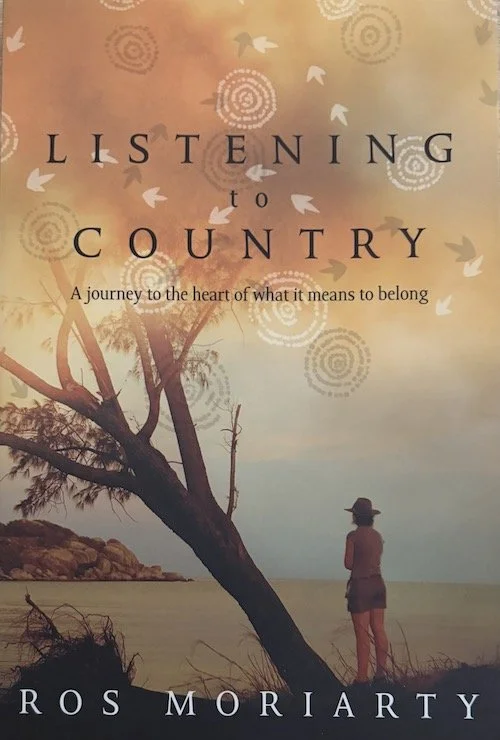
Published in 2011, it is a book that has stayed with me and become a touchstone of family and belonging.
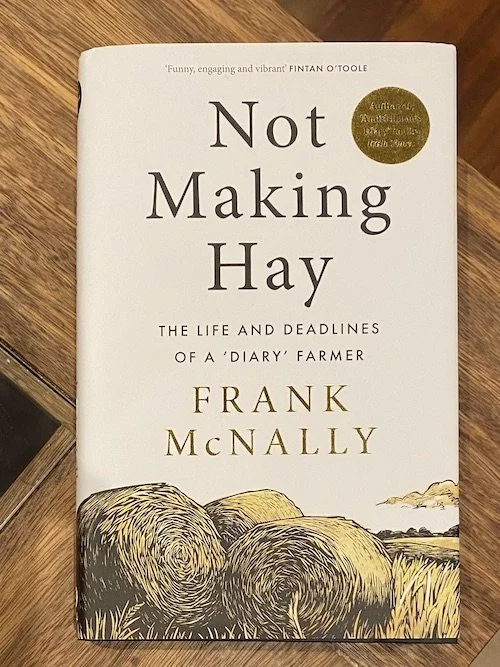
Not Making Hay: The Life and Deadlines of a ‘Diary’ Farmer
Frank McNally
Gill Books 2025
Twenty-four hours after finishing this book, Not Making Hay, which I read in one sitting, I am still immersed in Frank’s writing style: wonderful tangents and connections across people and places and time, and at the heart of all his writing, storytelling. I feel I can write of the author by his first name as I have had the privilege of meeting him many years ago when I was in Dublin presenting an exhibition at James Joyce House at 15 Usher’s Island, with the blessing and creative drive of the then owner.
Frank is the Chief Writer of The Irishman’s Diary / An Irish Diary (he explains the dual naming) in The Irish Times (a column first appearing in 1927, Frank McNally took it on in 2006). I don’t know what he will make of my comparison, but his columns are for me like Bach’s music; music that takes me on an unexpected musical ride that twists and turns but comes back home at the end (note this caveat: my knowledge of music is only as a listener with no expertise accompanying the enjoyment).
With Frank McNally’s columns, the opening line sets up what you think the column is about, then the words take flight down many pathways, only to return and settle back into the opening subject. I was fascinated (and dare I say vindicated) when I read this in Not Making Hay:
My favourite column subjects are things you see or hear that make you think and, when you think, that connect with something else in an interesting way. Ideally, that second thing then leads to a third thing, and/or back to where you started, in an elegant train of thought that stretches for at least 800 words without straining.
As a reader, I can attest that the train of thought is always elegant.
On his publisher’s website (Gill Books) they introduce the book in this way:
the man who has consistently held his finger on the pulse of a nation, turns his attention inwards and gathers his thoughts into a profound narrative of great depth.
Picking up on a variety of personal themes which have featured in his column in part or in whole over the years, the book is at once a cohesive reflection on Frank’s upbringing in Monaghan, his early career as a civil servant and his eventual foray into journalism, but also covers significant events which have shaped him and the Ireland which he has chronicled with such consistently brilliant perception and wit.
Each chapter weaves in family, rural Ireland, world travel, city life, history, and significant personal moments alongside the picture of the political and cultural fabric of Ireland.
I have reread two pieces several times:
The Night I had John Hume in My Car - 30 0ctober 1999
Plan B in Operation: A Surprise Double - 7 July 2003
They are perfect examples of why I read Frank’s column – witty, interesting and relatable. As is so often the case, I can hear my grandmother (Mrs Kennelly, who lived with us) telling stories with her siblings of their upbringing, peppered with what I think of as an Irish flavour. When Frank talks of his Auntie Mary and her description of someone ‘losing the run of yourself’ I hear my grandmother; when he explains the ‘meejum’ glass of stout, I hear my Great Aunt and Nanna talking of the two hotels in inner city Melbourne, Australia that their Irish female forebears ran for fifty plus years.
It was personally lovely to read his piece with a nod to James Joyce’s wonderful short story The Dead and the ‘snow being general all over Ireland’ – a significant reference in my life as both an Australian with Irish roots and a bookseller who hosted an exhibition in the house at the centre of that story.
Most poignant is Frank’s recounting of his journalist niece (Áine Kerr) writing in The Irish Times of his mother’s passing – it is a beautiful and deeply affecting few pages.
The Irish diaspora spreads out across the world and has, to this day, a vibrant and active role in the local society. This memoir is a gift of familiarity and belonging. For everyone else, this review is intended to introduce you to Frank McNally, an Irishman, skilled journalist, and wonderful storyteller. I am awaiting delivery of more copies for the gift-giving season that is upon us.
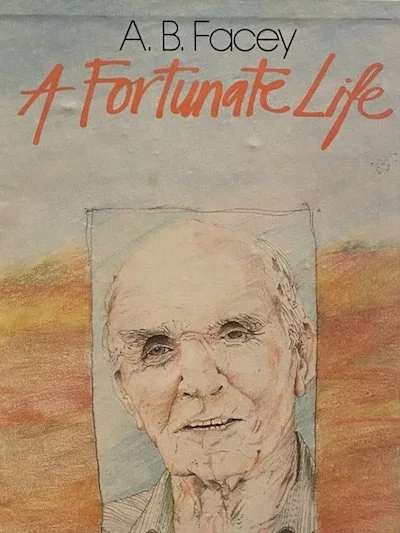
A Fortunate Life A.B. Facey. Allen Lane. 1981
A Fortunate Life
A.B. Facey
Recently in my home country of Australia, people were invited to vote for the Top 100 Books of the 21st Century. Organised by the Australian Broadcasting Corporation (ABC), a series of programs ran to support the building of the list on the station, Radio National.
Having been a bookseller for 40 years, a librarian for five years, and now involved in the legal community with regard to publications, I read the list with interest. Many of the titles I had either read, sold, gifted or recommended over my career or from my personal reading list.
I would suggest that polls such as this, whilst interesting, are not necessarily significant. I applaud anything that promotes reading and the celebration of writers, however their real value, I believe, lies in the confirmation that reading is an intensely personal pursuit and so much of the circumstance of when, where, how and why we read a specific book will lead to where that book sits in our memory and how we ‘rate’ it out of all the books we have read.
An example is A Fortunate Life by A.B. Facey, published in 1981. At that time, I was only a couple of years into my bookselling career. Despite the financial constraint that comes when there are seven children to raise, my mother fed my love of books and this in turn led to me embarking on a librarianship degree and, concurrently, a bookselling role.
The impact of this book on me was profound, not least because the author was born the year before my maternal grandmother and many of his recollections in this autobiography were familiar of her stories and life in Australia (Facey was born in 1894 and died in 1982). I had a physical reaction to his writing – my mind stilled, my breathing slowed – it was as if the rhythm of his life was infectious.
The Afterword, written by Jan Carter, in my ‘Special Edition’ (cased, hardcover) encapsulates the essence of the influence of this book on the reader. Here are the opening and closing sentences of that Afterword:
Albert Facey is Australia’s pilgrim. He wrote about his life as if it were a journey. Along his route, crossroads offered crucial choices – in some cases his very survival was at stake – and the tracks he followed led to learning, pain, and enrichments. Finally, all routes, rough and smooth, were brought together in his old age in a powerful outburst of creative activity – the book that integrated the experiences of his ‘fortunate life’. (Jan Carter)
Albert Facey has provided for ordinary people an understanding of their past which has challenged their view of the present and realigned their aims for the future. In this respect, his journey was most fortunate for all of us. (Jan Carter)
This autobiography from an ‘everyday’ Australian garnered praise on release, was included in school study lists, and saw the author nominated for Australian of the Year (an annual award conferred since 1960 and announced in the nation’s capital each January).
Of course, it was not included in the recent Top 100 list. It is probably unknown to many readers - a sign of how we move through cultural touchstones and social interests at a pace. However, it remains in my literary canon of influential and important books. And, in some ways, it is a book to read in these turbulent and uncertain times as it serves as a reminder of the extraordinary lives ordinary people live; lives that build the character of a nation despite the political headwinds of the day.
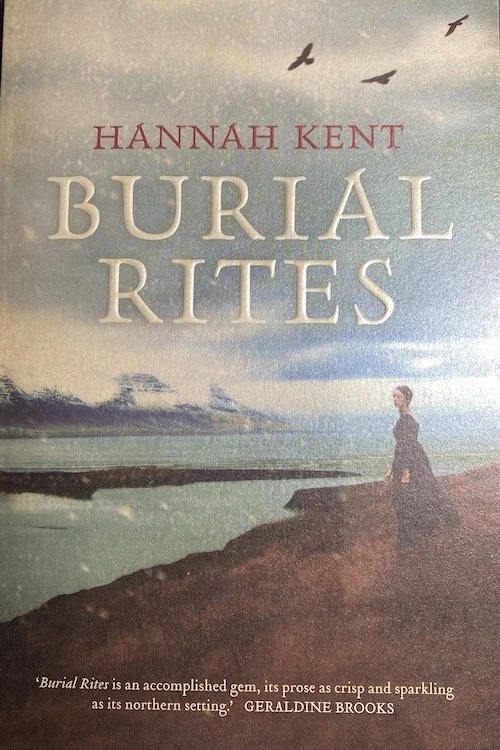
I am delighted to see that Burial Rites by Hannah Kent came in at No 6 of the Australian ABC Radio National’s Top 100 books of the 21st century list. At the time of writing my review of the book (on its release) for my bookstore’s quarterly book guide’s Year of Books column, I wrote: I was overwhelmed when I read Burial Rites by Hannah Kent and would cite this if I were asked for my top five books of all time. With a starting point of the name and circumstance of the last woman executed in Iceland in the 1800s, it takes the reader into a world of complex human emotions, challenging living conditions and constricting social mores. It is beautifully written and surely one of the most impressive debut novels ever published.
The Rosie Project
Graeme Simsion
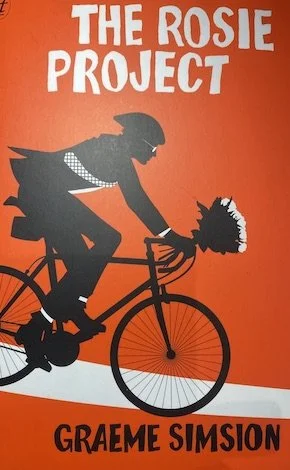
On its release in 2013, I reviewed this book as follows:
Don is of the view that he can apply science and logic to the question of how to obtain a wife and sets about making up a questionnaire for potential candidates. He soon discovers, after meeting Rosie, that human beings really don’t work this way! This is a funny yet touching portrayal of human relationships. (Autumn 2013)
All these years later, and after many events I attended with Graeme in my role as bookseller, I am genuinely pleased that The Rosie Project was included in the Australian list of the Top 100 books of the 21st Century in 2025.
Those literary encounters with Graeme are especially memorable because I was always impressed by his hard work to meet readers, booksellers and librarians across the country. And, his unfailing pleasantness at each event. This attention to his craft and readership has continued (with his partner Anne Buist, also an author) in all these intervening years. I remember being particularly pleased when The Rosie Project gained worldwide interest and a readership representing the broadest cross-section of society.
The Rosie Project remains a recommendation I offer to readers as an enjoyable and poignant window into relationships, and a celebration of the individual.

One shot of my extensive home library - https://www.precisionfitjoinery.com/
contact
If you wish to contact Mary please use the contact form.